
Game Dev Tycoon
Greenheart GamesSimulation
4.816.74K Reviews
- Version
- 1.6.18
- Installs
- 1.00M
- Age Rating
- Everyone
Screenshots



Our Review of Game Dev Tycoon
 Analysis by Appyee
If you’ve ever dreamed of running your own game development company, then Game Dev Tycoon might just be the perfect app for you. I decided to dive into this simulation game, and let me tell you, it’s been quite the ride. The app is available on both Android and iOS, so you can take your game development empire with you wherever you go.
What keeps me interested is not simply the fantasy of being a studio boss; it’s the way a run asks me to think about several decisions at once. I have to consider what kind of game to make, where to spend limited resources, and whether a promising idea is worth the risk of committing to it. That makes it a better fit for people who enjoy planning and learning from outcomes than for anyone looking for a fast action game.
Decisions Before the First Hit
The first thing that struck me about Game Dev Tycoon is how easy it is to get started. The app guides you through the basics of setting up your company with an intuitive tutorial. You get to name your company and your first game, which is a personal touch I really enjoyed. It’s all about those small details, right?
Once you’re up and running, you find yourself in a modest garage, which is quite reminiscent of the humble beginnings of many tech giants. It’s a familiar trope, but it works perfectly here. You start with a small budget, which means you need to make smart decisions from the get-go. It’s all about balancing creativity with financial prudence.
That small starting position is useful because it makes the cost of a choice feel concrete. I try not to treat every new idea as an automatic green light: a game can sound appealing and still be a poor use of the company’s time or money. A sensible approach is to think about the next release as part of a sequence, rather than judging it only by whether it seems exciting in the moment. A modest result can still teach me something that improves the next decision.
For a short everyday session, I can make one or two choices, check how a project is progressing, and then put the game down without needing to devote an entire evening to it. The longer-term appeal comes from returning to see how those decisions worked out. That stop-and-start rhythm suits a phone game well, although players who want every session to deliver a complete, dramatic payoff may find the management pace quiet.
Planning a Studio’s Next Move
I use the planning stage to think beyond the next launch: each project can be a chance to build experience, protect the studio’s resources, or test a different direction. That balance matters most when a tempting opportunity could narrow my choices later. From there, the interesting question is how I handle uncertainty once a game is underway.
The Gameplay
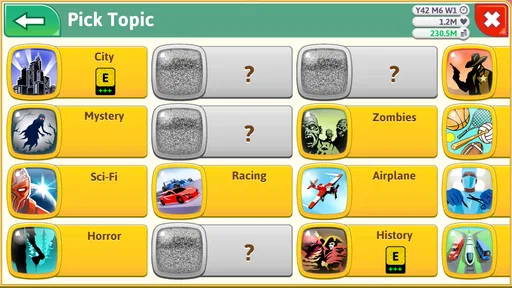
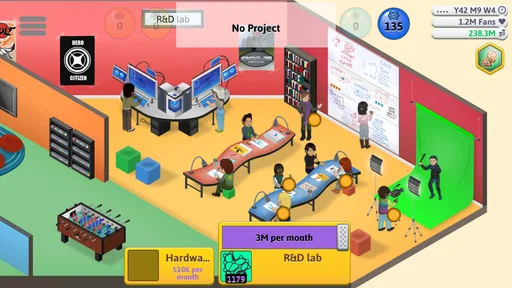
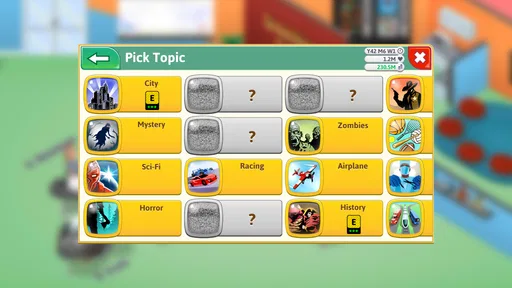
The core of Game Dev Tycoon revolves around developing games across different genres and platforms. You get to choose the genre, platform, and certain features of your game. It’s a bit like being a real developer, only without the late nights and coffee spills on the keyboard. As you progress, you unlock new technologies and can even research custom game engines.
Those choices create a useful planning horizon. I’m not only asking what might work for this release; I’m also deciding what kind of knowledge or capability I want to build toward. New technologies and custom engines give progression a practical purpose, because research can shape the tools available for later projects. One trade-off is that research takes attention away from simply putting out another game, so I think of it as an investment rather than a reward I should pursue automatically.
When choosing a project, I find it helpful to avoid changing every ingredient at once. If a release does well or poorly, a more deliberate set of choices makes its results easier to interpret. That is a small but meaningful strategy: use each launch as a test, then carry one lesson forward instead of guessing that success came from a single feature. It makes the feedback loop feel more like studio management and less like repeatedly pulling a lever.
Compared with many simulation games that focus on building a town, decorating a space, or keeping a steady stream of resources moving, this one puts the creative product itself at the center. The decisions are about making and selling games, not just expanding a map. I prefer that focus when I want a compact business simulation with a clear theme. If I’m in the mood for visual customization, direct control of characters, or a more hands-on production process, another kind of sim will probably suit me better.
Learning from Each Release
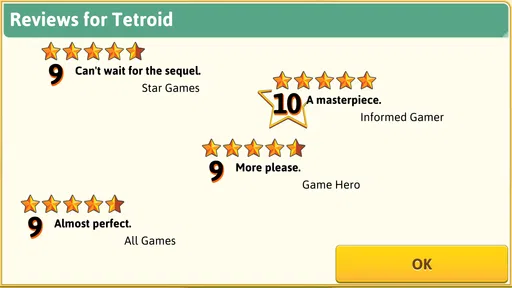
One feature I found particularly engaging is the feedback system. After releasing a game, you receive reviews and sales data. It’s like waiting for your report card and hoping you aced the test. The feedback helps you learn what works and what doesn’t, pushing you to improve with each new release.
The useful habit is to read that response as guidance, not as a promise that copying one successful formula will work forever. Reviews can help me spot what to adjust, while sales show whether a release found an audience. I get more out of the system when I remember the choices I made before launch and compare them with the result. That way, a disappointing game still has value: it can prevent me from repeating an expensive mistake.
There is a natural tension between experimentation and playing it safe. Repeating a familiar approach may feel comfortable, but it can limit what I learn; trying something different can be more revealing, though it also carries the risk of a weaker result. I like that the game gives this tension room to matter without turning every decision into a crisis. It encourages me to take measured risks, especially when the company can afford to absorb a setback.
Growth Brings New Trade-Offs
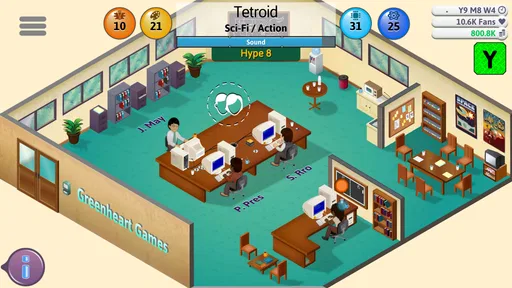
As your company grows, so do the challenges. You’ll move out of your garage into a real office space, hire employees, and tackle larger projects. This progression feels rewarding and keeps you hooked. The game has a nice balance of being challenging yet achievable, which is crucial for keeping players engaged.
Growth changes the kind of planning I need to do. A larger studio may make ambitious projects possible, but it also means I have more to manage than the next creative idea. Hiring and moving into an office feel like milestones, yet I don’t see them as a reason to expand as quickly as possible. The better question is whether the business is ready to support the next step. Choosing patience over expansion can be a sensible move when I would rather build a stable foundation than chase size for its own sake.
However, it’s not all smooth sailing. You’ll face tough decisions, like whether to invest in a new console or stick with PC games. These decisions can make or break your company, adding a thrilling layer of strategy to the mix. It’s like playing chess, but with a digital empire at stake.
That platform decision is a good example of why I try to keep a reserve of flexibility in my plans. A new opportunity can be tempting, but committing too much to it may leave fewer options for the next project. I weigh a possible upside against what I would give up by pursuing it, rather than assuming newer automatically means better. The game works best for me when I treat these choices as trade-offs, not as a puzzle with one obvious answer.
Who Will Enjoy This Management Pace?
I would recommend it to players who like seeing a business develop through a series of understandable choices, especially anyone curious about game-making but not looking for a technical development tool. It turns studio decisions into an approachable simulation, so there is no need to know how to code or design a real game to follow what is happening. The appeal is in guiding the company and seeing the consequences, not in building a playable game from scratch.
On the other hand, I would skip it if I wanted a highly realistic business simulator with detailed accounting, or if I needed constant action and immediate feedback. The game’s simplified model is part of its accessibility, but that also means players seeking granular control may find the business side too abstract. Likewise, anyone who dislikes repeated cycles of making a product, reviewing its outcome, and planning again may not connect with its central rhythm.
A realistic way I use a session is to make a decision about a project, check how the company is developing, and stop before I start making choices just to keep busy. When I return, the feedback gives me a natural point to reassess. That approach keeps the game’s longer arc enjoyable without turning it into a checklist. It also helps me notice whether I’m actually learning from outcomes or simply repeating the same habits.
Presentation and Practical Details
The graphics in Game Dev Tycoon are charmingly retro, which fits the theme perfectly. It’s not about high-end graphics here; it’s about the experience and the nostalgia. The sound effects and music are subtle but effective, creating a laid-back atmosphere that lets you focus on building your empire.
The presentation supports the management loop rather than competing with it. I can keep my attention on decisions and results, and the retro look gives the game a personality that matches its subject. It is a restrained style, not a showcase for elaborate animation, so players who judge a simulation mainly by visual spectacle should set their expectations accordingly.
Greenheart Games developed this paid simulation, which costs $4.99. It is rated Everyone, and its average rating is 4.8 from around 173,000 ratings, with over one million installs. The game was released on January 31, 2018; version 1.6.18 lists Android 9 as the minimum operating system. I’d treat those details as useful context when deciding whether it fits my device and budget, rather than as a substitute for considering the play style.
One practical question is whether it makes sense as a casual purchase rather than a free game to sample. For me, the answer depends on whether I enjoy patient, consequence-driven management. Its value is in returning to the studio and watching decisions accumulate, not in a single quick burst of spectacle. If I know I prefer short, energetic rounds or a game that constantly introduces new forms of interaction, I would spend my budget elsewhere.
A Strategy Game Worth Taking Slowly
Overall, Game Dev Tycoon is a delightful blend of creativity, strategy, and nostalgia. Whether you’re a fan of simulation games or a gaming enthusiast looking for something new, this app offers a satisfying experience. It’s easy to lose track of time as you get caught up in the thrill of developing the next big hit.
What I value most is the way it makes progress feel earned through a chain of decisions. The game is at its strongest when I plan ahead, accept that not every release will be a triumph, and use the results to adjust my next move. It is not trying to replace a deep, open-ended business simulator, and its focused structure will not suit every player. But for a relaxed mobile game about guiding a studio from humble beginnings toward bigger ambitions, that focus is a strength.
If you’re ready to channel your inner game developer, give Game Dev Tycoon a try. You might just find yourself hooked, strategizing your way to gaming glory. Just remember, every gaming empire starts with a single, well-crafted game.
Verdict
Strengths of Game Dev Tycoon
- Engaging simulation mechanics.
- In-depth game development process.
- Charming retro graphics.
- User-friendly interface.
- Encourages creative thinking.
Limitations of Game Dev Tycoon
- Limited replayability after mastery.
- Initial learning curve.
- Repetitive sound effects.
- Lacks multiplayer options.
- Occasional performance issues.
Similar Picks in This Category
View All
Truckers of Europe 3
Wanda Software4.3

Town Building Life Simulator
XGame Global4.2

Fidget Toys Trading・Pop It 3D
Freeplay Inc4.7

Sculpt People
CrazyLabs LTD4.4

Scary Teacher 3D
Z & K Games4.2

Hair Tattoo: Barber Shop Game
CASUAL AZUR GAMES4.3
Frequently Asked Questions
What is Game Dev Tycoon about?
Game Dev Tycoon is a business simulation game where players start their own game development company. Players create games, manage resources, research new technologies, and aim to become market leaders. The game offers a retro experience by starting in the 1980s and progressing through decades of gaming history.
Can I play Game Dev Tycoon offline?
Yes, Game Dev Tycoon is fully playable offline. Once you've downloaded and installed the game on your device, you can enjoy all its features without needing an internet connection, making it perfect for gaming on the go or in areas with limited connectivity.
What platforms is Game Dev Tycoon available on?
Game Dev Tycoon is available on multiple platforms, including Windows, macOS, Linux, iOS, and Android. This wide availability ensures that players can enjoy the game on both desktop and mobile devices, providing flexibility in how and where they choose to play.
Does Game Dev Tycoon support mods?
While the desktop version of Game Dev Tycoon does support mods, allowing players to customize and enhance their gaming experience, the mobile versions do not support modding. Players looking for a customizable experience might prefer playing on a PC.
Are there in-app purchases in Game Dev Tycoon?
No, Game Dev Tycoon does not include in-app purchases. Once you purchase the game, you have access to all content without additional costs. This purchase model ensures a complete and uninterrupted gaming experience for all players.
Play our best games!


